What I learned
A decoupled stack only pays off when the content editing experience stays familiar. Editors at a restaurant don’t want to learn a new CMS — they want the WordPress dashboard they already know. The interesting design problem was making the front-end feel modern (Astro, fast, SEO-tight) while leaving the back-end exactly as comfortable as it was.
Collaborating with Andrew Riefenstahl on this also reinforced how much speed there is in a well-prepared starting template. Building from a bare-bones, SEO-enriched, performance-tuned starter meant we could spend our time on the parts that actually mattered to the client: typography, layout, imagery, and the menu/calendar surfaces.
What I did
- Owned the UI/UX design and front-end implementation on Astro, layered over the client’s existing WordPress CMS as a headless backend.
- Built from a refined personal-site starter (Andrew’s, with SEO and performance baked in) so we shipped fast without re-solving the foundation.
- Paired the new site with the existing tolbertsmusic.com calendar so visitors see one unified Tolbert’s brand across both properties.
- Partnered with Andrew on the backend handoff — WP-ENV for Docker-based local WordPress, GitHub version control, Lightsail hosting, and a hardened DNS configuration (MX records, DMARC) so email kept working through the migration.
What I shipped
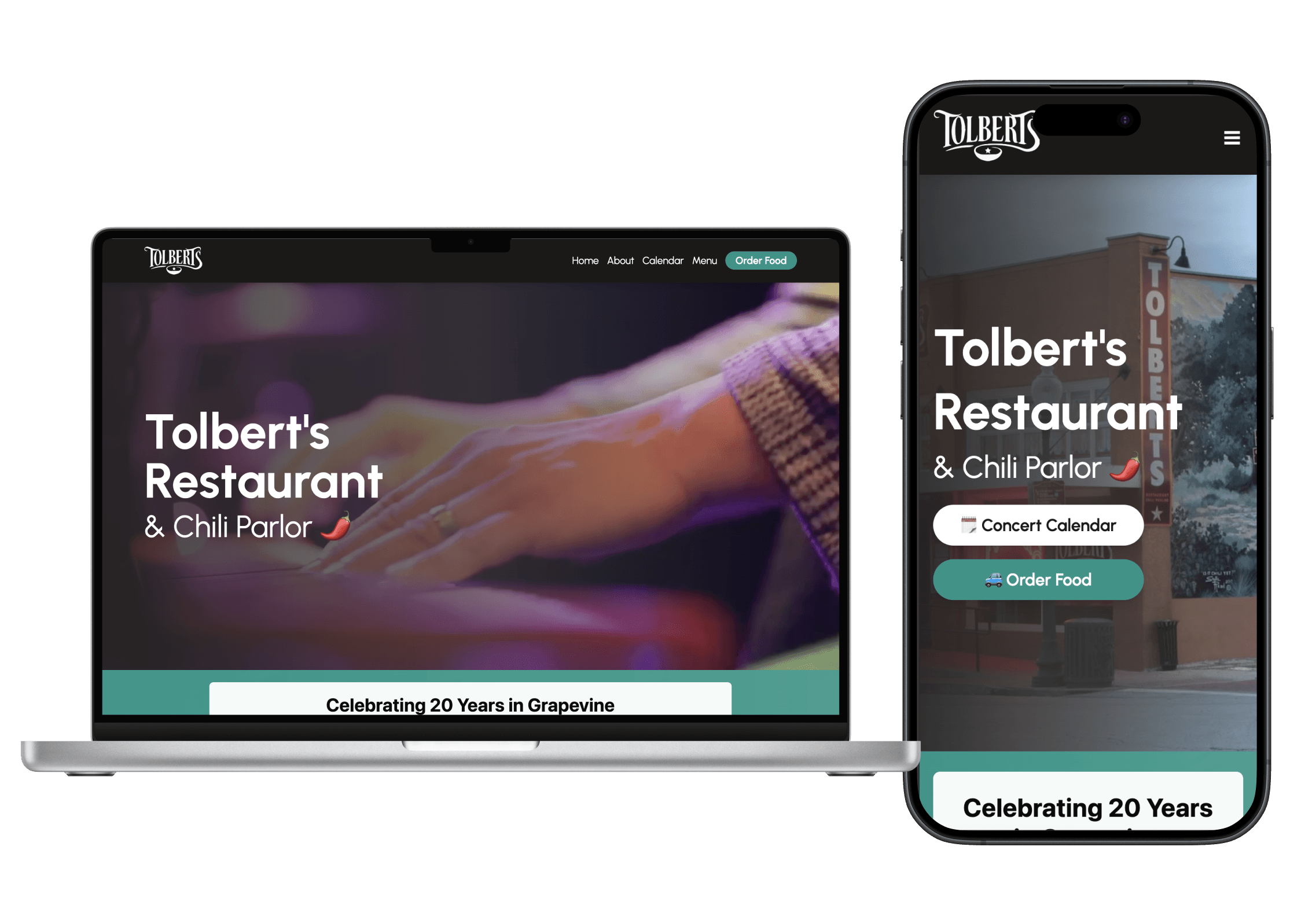
A live restaurant marketing site at https://tolbertsrestaurant.com — modern Astro frontend, headless WordPress backend, deployed on Netlify with the CMS on Amazon Lightsail. The client got a faster, better-looking, more maintainable product than the alternative proposals on the table, at lower long-term cost.